
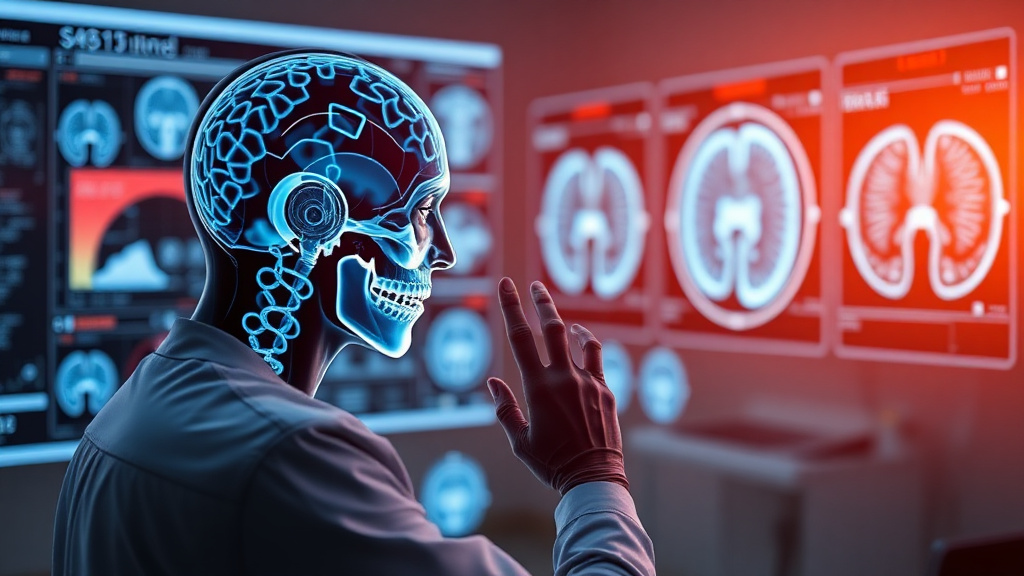
Imagine a world where diseases are identified in seconds with near-perfect accuracy, where human error turns obsolete, and where patients obtain life-saving diagnoses before symptoms even emerge. This is no longer science fiction—it’s happening now. Machine learning systems is revolutionizing healthcare diagnostics, leveraging machine learning algorithms and deep neural networks to process diagnostic imaging, lab results, and patient data with exceptional precision. This article examines how intelligent systems are transforming diagnostic medicine, speeding up treatment timelines, and ultimately improving patient outcomes across the globe.
Transformative Impact of AI on Healthcare Imaging
AI technology has revolutionized medical imaging by allowing radiologists to detect abnormalities with remarkable precision and efficiency. AI algorithms analyze thousands of images in seconds, identifying subtle patterns that human eyes could overlook. This technology reduces diagnostic errors, speeds up patient care, and significantly improves clinical outcomes across various imaging modalities including X-rays, CT scans, and MRI imaging.
The incorporation of AI in radiological facilities worldwide has shown significant results, with some systems achieving diagnostic accuracy rates surpassing 95 percent. These intelligent systems function in partnership with radiologists, complementing their expertise rather than replacing human judgment. By handling automatically standard imaging evaluation tasks, AI liberates medical professionals to dedicate attention to challenging situations, patient interaction, and diagnostic decisions, ultimately advancing overall healthcare delivery and patient satisfaction.
Deep Learning Algorithms in Radiology
Deep learning algorithms embody the leading frontier of artificial intelligence uses in radiology, leveraging multi-layered neural networks to process complex medical imaging data. These complex architectures learn from vast datasets of marked diagnostic images, developing the capacity to identify pathological signatures, anatomical variations, and abnormal findings with remarkable precision. CNN architectures demonstrate superior performance in image examination, identifying key characteristics that distinguish between healthy and diseased tissue with medically meaningful accuracy.
The implementation of advanced neural networks in radiology departments has shown significant promise, especially for recognizing tumors, cardiac disorders, and neurological conditions. These algorithms continuously improve through machine learning processes, adapting to new information and refining their detection accuracy. Radiologists more frequently use artificial intelligence-assisted platforms to verify interpretations, flag emergencies, and deliver complete assessments, fostering mutual cooperation between clinical knowledge and machine learning systems.
- Convolutional neural networks detect lesions in medical images accurately.
- RNN models analyze time-series image data with strong performance.
- Pre-trained model adaptation facilitates rapid deployment across various imaging techniques.
- Ensemble methods integrate various models for enhanced diagnostic reliability.
- Attention mechanisms emphasize clinically significant regions in medical images.
Improving Diagnostic Precision and Patient Outcomes
Artificial intelligence systems have displayed remarkable proficiency in processing complex medical data, often surpassing standard diagnostic techniques in exactness and uniformity. By processing vast datasets and detecting fine-grained patterns undetectable to human observation, AI algorithms can recognize illnesses at earlier stages with significantly reduced false positives. This advancement results in better health results, as early intervention becomes possible when treatment is most effective. Healthcare providers now employ AI-powered tools to reach better-informed medical judgments, shortening time to diagnosis and enhancing treatment precision across various medical fields.
The incorporation of AI into diagnostic processes has substantially reshaped clinical practice, enabling physicians to deploy their skills more strategically while machines process analytical tasks. Practical applications demonstrate that AI systems achieve accuracy levels exceeding 95% in many use cases, from radiology to pathology. This synergistic partnership between professional judgment and machine intelligence produces a powerful diagnostic framework. Patients benefit from faster diagnosis, more tailored care strategies, and ultimately improved clinical results, while clinical organizations achieve enhanced performance and efficient resource management.
Early Identification of Disease and Disease Prevention
Early identification of illness represents one of artificial intelligence’s most transformative applications in healthcare, enabling medical professionals to recognize conditions before they advance to advanced phases. AI-powered systems examine diagnostic information, patient records, and imaging results to pinpoint high-risk patients with exceptional accuracy. This preventive strategy transforms healthcare from treating existing conditions to disease prevention, reshaping patient management approaches. Machine learning models can flag minor irregularities that could elude human observation, ensuring no critical findings are missed during initial evaluations.
Prevention-focused AI applications are decreasing disease burden and death rates across populations, especially for cancer detection, heart disease, and neurodegenerative conditions. By identifying high-risk individuals in early stages, clinicians can introduce preventative measures prior to serious complications occur. This approach not only enhances individual patient outcomes but also lowers total medical expenses by preventing expensive emergency treatments. AI-driven early detection programs are becoming standard practice in top healthcare facilities globally, demonstrating significant gains in survival outcomes and overall well-being.
- AI algorithms detect cancers at initial phases with enhanced precision
- Cardiovascular disease screening pinpoints at-risk patients before acute events occur
- Predictive analytics identify neurological conditions in pre-symptomatic phases
- Preventive interventions minimize complications and hospitalization needs substantially
- Early detection programs enhance survival outcomes at five years across various disease types
Deployment Obstacles and Future Prospects
Current Implementation Barriers
Despite AI’s significant potential in healthcare diagnostics, significant implementation challenges persist across the industry. Data privacy concerns, compliance with regulatory standards, and requirements for extensive clinical validation delay deployment timelines. Additionally, healthcare institutions must allocate significant resources in system infrastructure improvements and employee education to integrate AI systems successfully. These barriers, while substantial, are gradually being tackled through collaborative efforts between technology companies, medical institutions, and regulatory bodies worldwide.
Integration with existing healthcare workflows presents an additional critical challenge for AI implementation. Many hospitals function with legacy systems not compatible with contemporary AI platforms, necessitating costly and time-consuming upgrades. Furthermore, clinician skepticism and opposition to automated decision-making necessitate comprehensive education programs. Establishing trust between medical professionals and AI systems requires transparent algorithmic processes, clear explanation of diagnostic recommendations, and validated clinical results that confirm AI’s superiority over traditional diagnostic methods.
Upcoming Prospects and Possibilities
The future outlook of AI in healthcare diagnostics looks highly favorable, with new technological developments poised to overcome current limitations. Advanced federated learning approaches will facilitate safe data collaboration between organizations without undermining patient privacy. Next-generation AI models will become increasingly interpretable, allowing physicians to understand diagnostic reasoning. Ongoing funding in scientific advancement promises enhanced diagnostic accuracy, quicker computational performance, and expanded applications in multiple healthcare disciplines, ultimately reshaping global healthcare delivery.
